
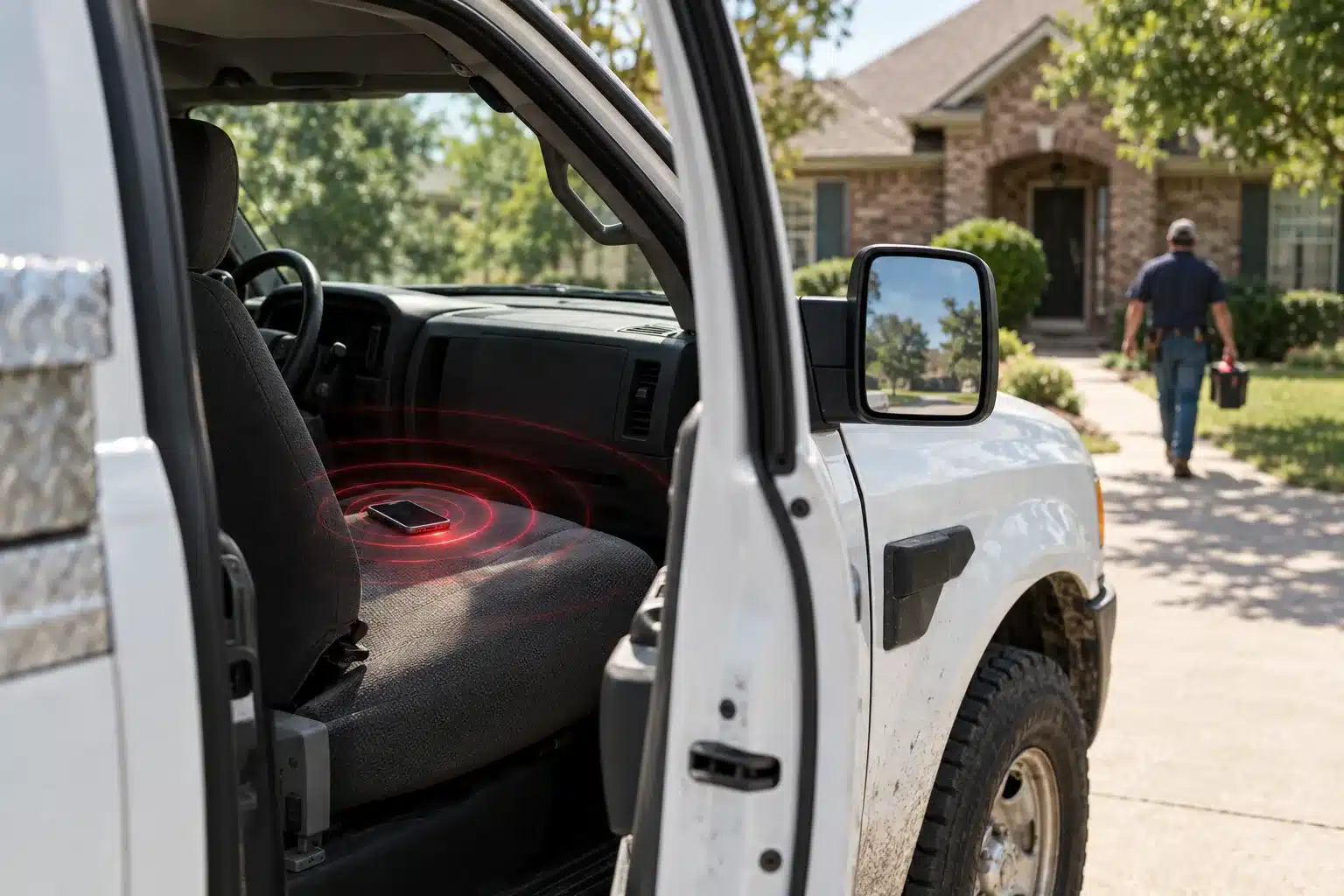
Before you spend another dollar on ads, try this. Pull out your cell, call your own business line, and time how long it takes a person to pick up. That number is your lead response time, and for a lot of local businesses it’s the most expensive number nobody tracks.
When we run this test with owners, the usual result is four rings and then voicemail. The greeting promises someone will get back to you as soon as possible. No text follows. Nothing does.
That’s the leak. You paid for the phone to ring, through ads or SEO or the wrap on your truck, and then handed the caller to whichever competitor happened to be near a phone. Owners in this spot usually tell us their advertising isn’t working. Often the ads are fine and the handoff is broken.
How lead response time decides who gets hired
Nobody researches a plumber for a week. A Denison homeowner with a leaking water heater searches, looks at the three businesses under the map, and contacts two or three of them within a couple of minutes. A call to one, a form on another, maybe a Facebook message to the third.
Then they wait. And they tend to hire the first one that responds like a professional. Not always the cheapest, not always the best reviewed. The first one that answers, sounds like they know what they’re doing, and offers a time.
There’s research behind this. For a 2011 Harvard Business Review study, researchers audited how fast 2,241 U.S. companies responded to web leads and analyzed 1.25 million leads from 42 companies. Companies that tried to reach a lead within an hour were nearly seven times as likely to get a real conversation with the decision maker as those that waited even an hour longer. Compared with companies that waited a day or more, they were more than 60 times as likely. Almost a quarter of the audited companies never responded at all.
Those were mostly online leads, not calls to a roofer. If anything, the local version is harsher. The homeowner with water on the floor isn’t waiting an hour. So five minutes is our rule of thumb, and it’s a target you can actually hit once the system is set up for it.
Where your leads leak
Leads come in through more doors than most owners count, and each door fails in its own way.
- Calls during jobs. You’re under a sink or up on a roof, the call rings out, and nobody calls back until evening, if then.
- Website forms. They go to a shared inbox three people half-watch, or to an address nobody has opened since spring. Test yours today. Broken forms fail silently.
- The call button on your Google Business Profile. It dials whatever number is listed, which may be an office line nobody answers while you’re in the field. And if you’re still counting on customers to message you through Google, Google shut off Business Profile chat in July 2024.
- Facebook and Instagram messages, sitting in an app on one person’s phone.
- Nights and weekends. For emergency trades that’s where a lot of the best-paying jobs are, and it’s when most businesses go dark.
Pick the door with the most traffic and fix that one first. You don’t need all five solved this month.
The fixes, cheapest first
Missed-call text-back
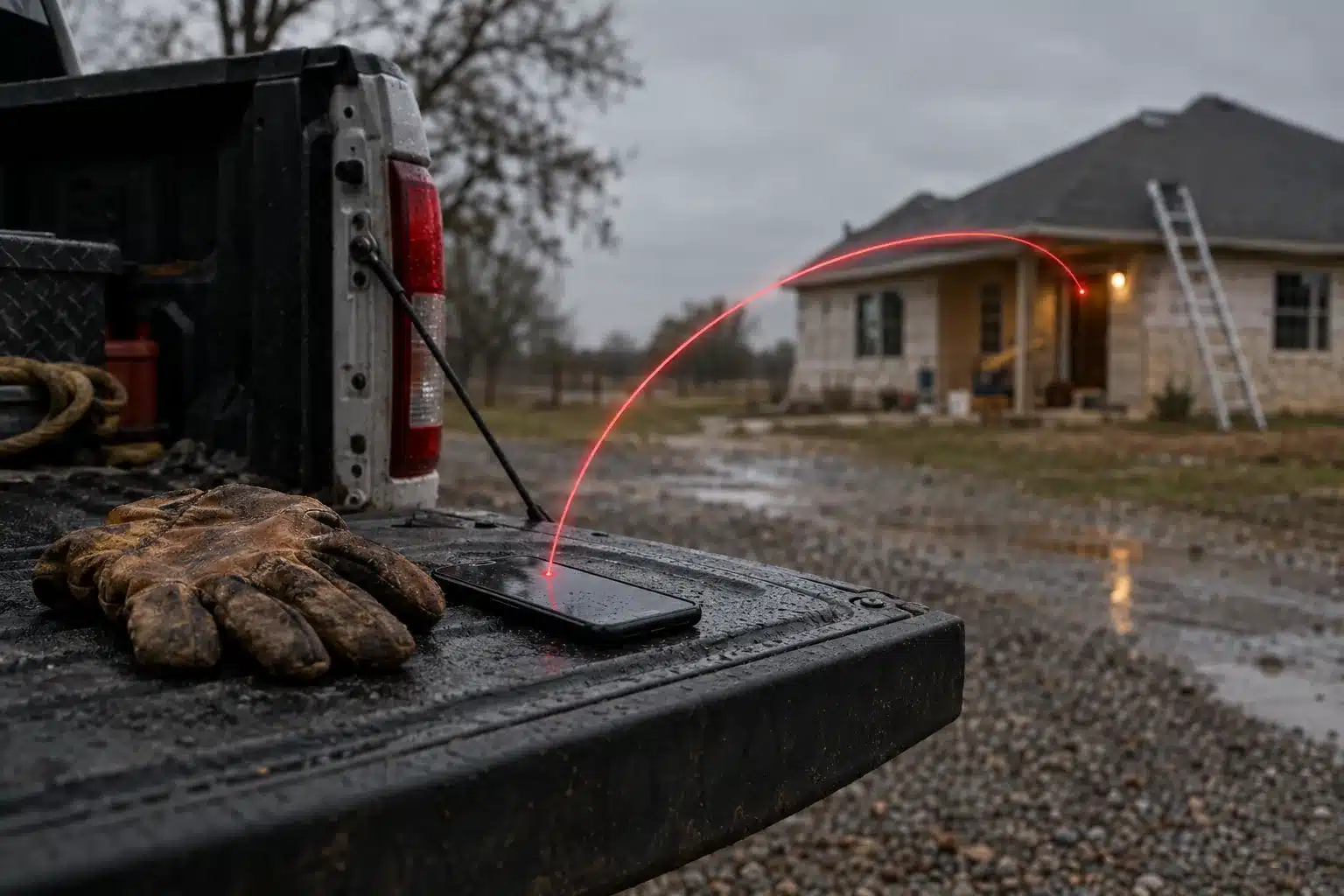
If you only do one thing, make it this one. When a call goes unanswered, an automatic text goes out within seconds. Something like:
Sorry we missed you, this is Mike with [your business]. I’m on a job right now. What do you need help with? I’ll get right back to you.
A dead call turns into a live text thread while the person is still holding their phone. Most business phone systems include missed-call text-back now, and standalone tools cost less a month than a tank of diesel. If you miss twenty calls a month, it’s hard to find a better return anywhere in local marketing.
One inbox, one owner, one window
Route calls, texts, form fills and messages to one place. Name one person who owns it. Then put a response window in writing: fifteen minutes during business hours is fair for a service trade, and five is better if you can manage it.
Leads rot when nobody owns them. “Somebody usually gets it” is how they get lost.
Be honest about after hours
You have three real options. An answering service that can actually book appointments. An on-call phone that rotates through the crew. Or an automatic reply that makes a specific promise. What loses jobs is the fourth option, a generic voicemail that promises nothing.
“We’re closed until 7 a.m. and you’re first on the list. Text this number your address and what’s going on” keeps the lead. “Please leave a message” hands it to whoever picks up next.
Ask three questions, then book
Speed gets you the conversation. You can still lose it by turning the first contact into a quoting session. Every round of back-and-forth about price before anyone has seen the job gives the customer another few minutes to keep calling around.
Ask what’s going on, where they are and when they’re free. If they push on price, give an honest range. Then get them on the calendar. The appointment is the win. The estimate can wait until you’re standing in their yard.
Follow up more than once
Most local businesses try once and quit. A lead who didn’t pick up hasn’t said no. They were at work, or driving, or wrangling kids.
A sequence that suits most trades: call and text right away, again that afternoon, the next morning, on day four and on day ten. Five touches over ten days, mixing calls and texts. After that, move them to a check-in every few months. Plenty of home projects take a season to decide on, and the business that’s still politely around when the money frees up usually gets the call.
Run your own numbers
Here’s a made-up but ordinary example. Say you get forty leads a month and close a quarter of them. That’s ten jobs. Now say faster answers and real follow-up win you four more of the contested ones, the leads you used to concede by default. Fourteen jobs from the same forty leads.
At a $1,200 average ticket, four extra jobs a month comes to about $57,600 a year. No extra ad spend. No new website. The tools cost a few hundred dollars a year.
Your numbers will be different, so plug in your own. Then ask what it would cost in ads to buy those extra jobs instead. That comparison is why we look at lead handling before we talk about anyone’s marketing budget.
Track three numbers
- Median lead response time, from the moment a lead arrives to the first human contact
- Contact rate: the share of leads you ever actually talk to
- Close rate among the people you did talk to
A whiteboard and a marker will do. If contact rate is low, you have a speed and persistence problem. If contact rate is healthy and close rate is low, the problem is the sales conversation. Those are different fixes, and knowing which one you have saves you a month spent on the wrong one. If you’d rather see it pulled together automatically, with which calls came from Google and which from your website, that’s what our reporting shows.
Three checks for today
- Call your own number from a phone that isn’t saved in your contacts, and time the response.
- Fill out your own website contact form under a fake name and confirm it lands somewhere a person will see it.
- Open every message inbox you have (Facebook, Instagram, any chat widget on your site) and count the unanswered messages.
That last one usually stings. It’s also where the fastest money tends to be.