
Somebody has called you about Google Ads. Probably several somebodies, usually from out of state, promising the phone will ring by Friday. Every time you’ve hung up, part of you has wondered whether Google Ads for small business owners like you actually works, and whether you’re leaving money on the table by skipping it.
Here’s our honest read for Sherman, Denison and the rest of Texoma. We run paid search for clients, and we still tell a fair number of owners who ask about it to spend that money somewhere else first.
What you’re actually buying
Google Ads buys you position at the exact moment someone is looking for what you sell. That’s the whole product. Somebody in Denison types “water heater leaking” at 6:40 on a Tuesday morning, and your ad shows up above the businesses that spent years earning their spot in the organic results.
Two things follow. It’s fast: you can be live tomorrow, where SEO takes months. And it stops the day you stop paying. Nothing carries over. You’re renting.
Renting is the right call in plenty of situations. Just be clear about what happens to your lead flow when the card gets declined.
When Google Ads for small business makes sense
Four situations where we say yes without much hesitation:
- Emergency and urgent work. Burst pipes, lockouts, an AC that quits in August, towing, water damage. Nobody comparison shops. They call the first credible result, so position is everything.
- A high-value customer. If one closed job is worth $4,000 or $40,000, you can absorb a lot of clicks that go nowhere. A roofer has room that a $22 haircut doesn’t.
- You’re new or just expanded. Opened a second location in Denison? Nobody knows you’re there, and Google doesn’t really either yet. Ads cover the gap while the organic work catches up.
- You’re boxed out of the map. In some Texoma categories the local pack belongs to businesses with hundreds of reviews and fifteen years of history. Paid search gets you in front of those customers this year instead of three years from now.
One more option for home service trades: Google’s Local Services Ads, the listings with the Google Guaranteed or Google Screened badge that often sit above everything else. You pay per lead instead of per click, and you have to pass Google’s license and background checks first. For a plumber or HVAC company we’d usually test those before regular search ads.
When it’s a bad idea
Ads amplify whatever is already happening in your business, including the problems.
Your website doesn’t convert
If the site is slow, confusing or twelve years old, paid visitors land and leave, and you paid for every one of them. Fix the destination before you buy traffic to it.
Nobody answers the phone
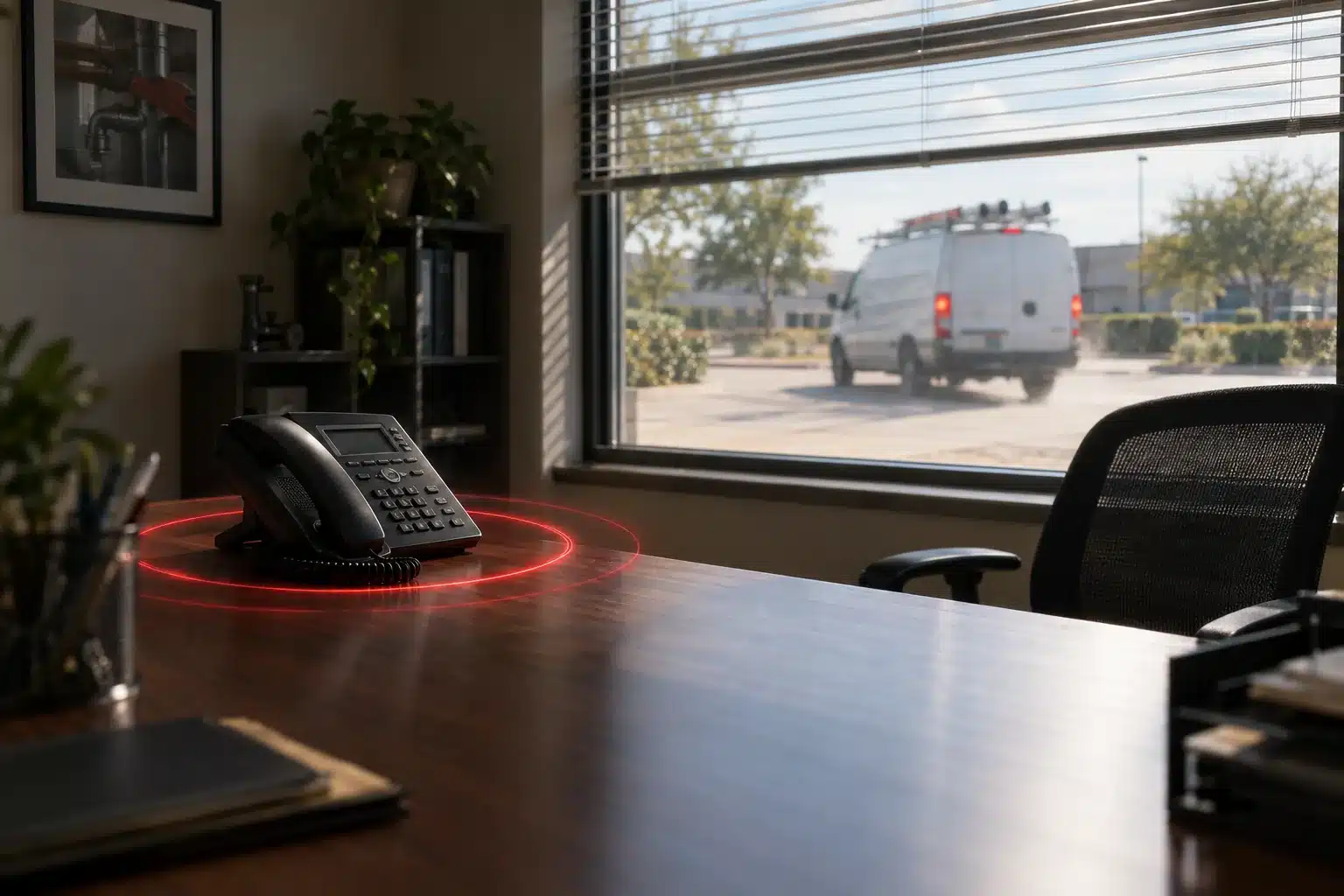
Picture it: the ad works, the phone rings at 10:15 on a weekday, and it rolls to voicemail because everyone is on a job. That customer calls the next result, and you still paid for the click. If follow-up is inconsistent now, ads just make it expensive too. We wrote about why the first business to answer usually gets the job and the cheap fixes for it.
The budget is too thin to learn anything
At typical home service click prices, a couple hundred dollars a month buys around two or three dozen clicks. That isn’t enough data to know what’s working. You’d get more from the same money spent on your Google Business Profile, your reviews and your site.
You can’t take more work
Sounds obvious. It isn’t. Plenty of Texoma contractors are already booked weeks out. More leads you can’t serve annoy people and grow nothing. Raise your prices first.
What clicks cost
LocaliQ’s home services search advertising benchmarks, built from more than 3,200 US campaigns running from April 2024 to March 2025, put the average cost per click at $7.85 and the average conversion rate at 7.33%. HVAC averaged $9.68 a click, plumbing $10.49, and roofing and gutters $10.70. Those are national averages. Your numbers in Grayson and Cooke counties will be different, sometimes cheaper than Dallas and sometimes not.
Run that math on your own business. At $9 a click, if 7% of clicks call or fill out a form and you close one in three of those, each new customer costs you about $385 in ad spend. Whether that’s a bargain or a disaster depends on what a customer is worth to you, and on whether they come back next year.
If you don’t know your close rate or your average customer value, that’s the first project. The ads come after. When you do have those numbers, we’re happy to look at them with you and give you a straight answer on whether ads would pay for themselves. Book a consultation and bring them along.
Three ways small businesses waste ad money
- Broad match with no negative keywords. Google will happily spend your budget on “free,” “DIY,” “salary” and “how to” searches. Building negative keyword lists is boring, and it’s most of the job.
- Sending every ad to the homepage. Someone searching “emergency AC repair” should land on a page about emergency AC repair, not a homepage with a slideshow.
- No call tracking. If you can’t tell which calls came from ads, you can’t tell whether any of it worked. You’re just watching a balance go down. This is the gap our call and visitor reporting closes.
The order we’d go in
For most small businesses here, the sequence is: get the Google Business Profile fully built out and collecting reviews, make sure the website loads fast and makes it obvious how to reach you, and put a real process behind answering and following up on leads. Then turn on paid search.
Owners who go in that order usually find ads profitable. The ones who start with ads tend to decide “Google Ads doesn’t work,” when the ads just found the weak spot faster than anything else would have.